Winter · July
Prune a row
Learn why each cut matters, then do a row yourself.
Single-vineyard wines from Tuerong, Mornington Peninsula
It doesn’t need to be. Great wine starts with great grapes, grown in the right place.
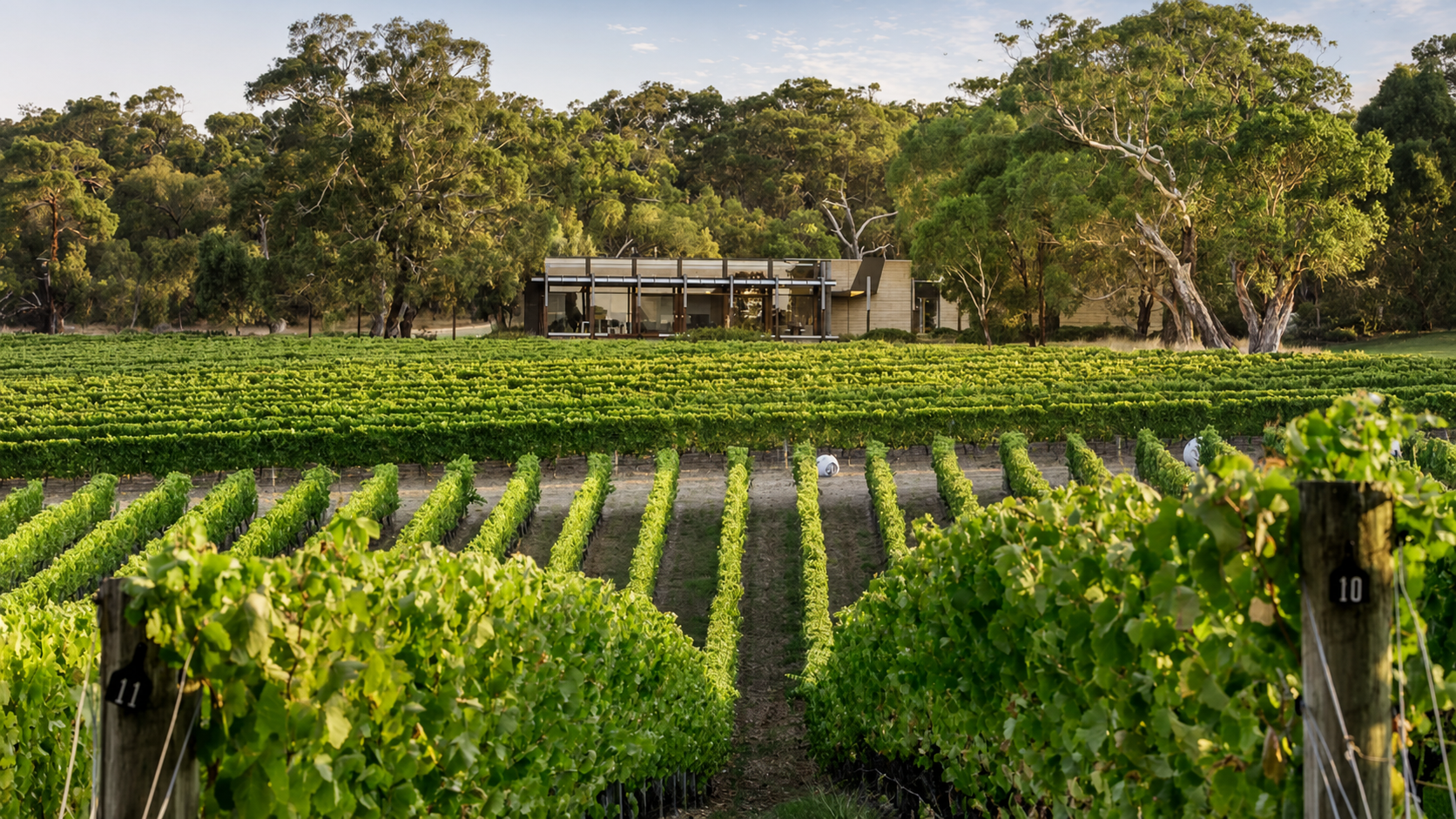
DRAY is a family wine from one vineyard: Robinson Vineyard in Tuerong.
The Mornington Peninsula is one of Australia’s best places for Pinot Noir and Chardonnay. Cool sea breezes and a long, slow ripening season give the wines their freshness and detail. Robinson Vineyard’s fruit has gone into some of the Peninsula’s best-known wines for decades.
The quality was already in the vineyard. So we pared it back to one block for each wine. We pick when the grapes taste right, and bottle when the wine does.
2025
Red cherries, a bit of spice. Savoury, light on its feet, with fine tannins.
Mushroom pasta, roast pork, lamb or salmon.Takeaway night? Peking duck or a mushroom pizza. Earthy, savoury, a bit of fat. That's what it loves.
Good now. Even better in a few years.Open now: pour it into a decanter an hour before. Or lie it down somewhere cool. This is our first vintage, but not the first wine from these vines. Pinot from this vineyard ages well: over six to eight years, the fresh red fruit turns savoury and earthy. We’ll update this as it ages.
One block, Upper MV6, planted in 1997.Cane pruned by hand. You can come and see the actual vines.
Simply. 10% whole bunch, 18 months in French oak.We let the fruit do the work. Whole bunch means some grapes go in with their stems on, which adds lift and spice. 20% of the barrels were new, so the oak stays in the background. Sealed with a Diam cork, so no corked bottles.
2025
Citrus, white peach and a fine, tight line.Not buttery. Fresh, with depth.
Seafood, or anything crumbed.Snapper, prawns, scallops. The fresh citrus cuts through crumb and richness, which is why it's so good with fish and chips.
Best now, while it's fresh and tight.Open now: fridge-cold, then let it warm up a little in the glass. Or keep it until about 2032. Critics give Chardonnay from this vineyard seven or eight years. It gains texture and depth as it goes. We’ll update this as it ages.
One block, I10V1, planted in 1988.Among the older Chardonnay vines on the Mornington Peninsula.
Simply. 18 months in French oak, then bottled.Long and slow, so the fruit stays front and centre. Sealed with a Diam cork, so no corked bottles.
Robinson Vineyard, Tuerong. Cane pruned by hand.
Each winter we choose the best one or two new canes on each vine and cut away the old wood. Fruit only grows from new wood, so that choice sets up the vintage.
At the right moment.
We taste the grapes and measure their sugar, in Baumé. More sugar means more alcohol, so we pick when ripeness and freshness line up.
The sugar in the grapes turns to alcohol.
Pinot Noir stays on its skins, which is where the colour comes from. A few whole bunches, stems and all, add spice.
Chardonnay is pressed off its skins straight away, so only the juice is fermented.
18 months in French oak.
Oak lets in a little air, which softens the wine over time. Mostly older barrels, so the oak stays in the background.
Sealed with a Diam cork.
Fining and filtering make a wine clear. We only do it when a wine needs it, so as little as possible is taken out.
Here's how it works:Opening soon. Here's how it'll work:
900 bottles of each. That’s the whole 2025 vintage.
Whoever’s first. We don’t hold any back, and there’s no list to wait on.
One bottle is fine. Take six or more and delivery’s on us.
$70 a bottle, plus delivery.
A dray is the low, strong cart that used to haul wine barrels. The name is a nod to the work it takes to get from vine to bottle. All so the bottle is worth opening.
Pete Finnegan
Co-ownerCustodian of Robinson Vineyard, first planted by Hugh Robinson. Emergency doctor from Ireland. Loves the pruning and the barrel tastings where the decisions get made.
Alejandra Molano
Co-owner & winemakerChemical engineer from Colombia. For her, winemaking comes down to timing: when to pick, and when to leave it alone.
Will Byron
WinemakerStarted Onannon in 2008. Before that, Coldstream Hills and Stonier.
Twice a year, join us for pruning and harvest. Every day ends with a long lunch at the Vineyard House with Pete, Alejandra and Will.
Winter · July
Learn why each cut matters, then do a row yourself.
Autumn · March
Harvest by hand from the block that makes your wine.


The Vineyard House · Wardle
Designed by Wardle, the house follows the vine rows and is built from solid rammed earth. It won the Harold Desbrowe-Annear Award for residential architecture.
Architecture: Wardle · Photography: Trevor Mein